01
NecessaryAlways on
Required for the site to work (login, preferences, security). Always on.
Three open-source repositories for growing AI inside a small company: one to run it on your own servers, one to search company documents, one to automate processes.
Late September 2026: among developers and IT managers, the question is no longer whether AI is impressive, but which AI a small company can actually afford and control. Three open-source projects have stayed near the top of GitHub's star and activity charts because each answers that for a small business: models on your own hardware, search over your own documents, processes automated with agents. Here are the three worth knowing, catches included.
Ollama is an open-source runtime (MIT licence) that downloads and runs language models — from Llama and Qwen to Gemma and DeepSeek — directly on a PC, a small server or a Mac, with a single command or an OpenAI-compatible API. As of 24 September 2026 the repository has more than 181,000 stars on GitHub and ships commits almost every day.
For an Italian SME or MSP that means offering internal AI assistants — a warehouse chatbot, an email summariser — without data leaving the company and without a per-token monthly bill. It is also the base several other open-source tools build on, including the next one on this list.
To try it, install Ollama and run a lightweight model that runs even on a laptop with no dedicated graphics card: ollama run llama3.2
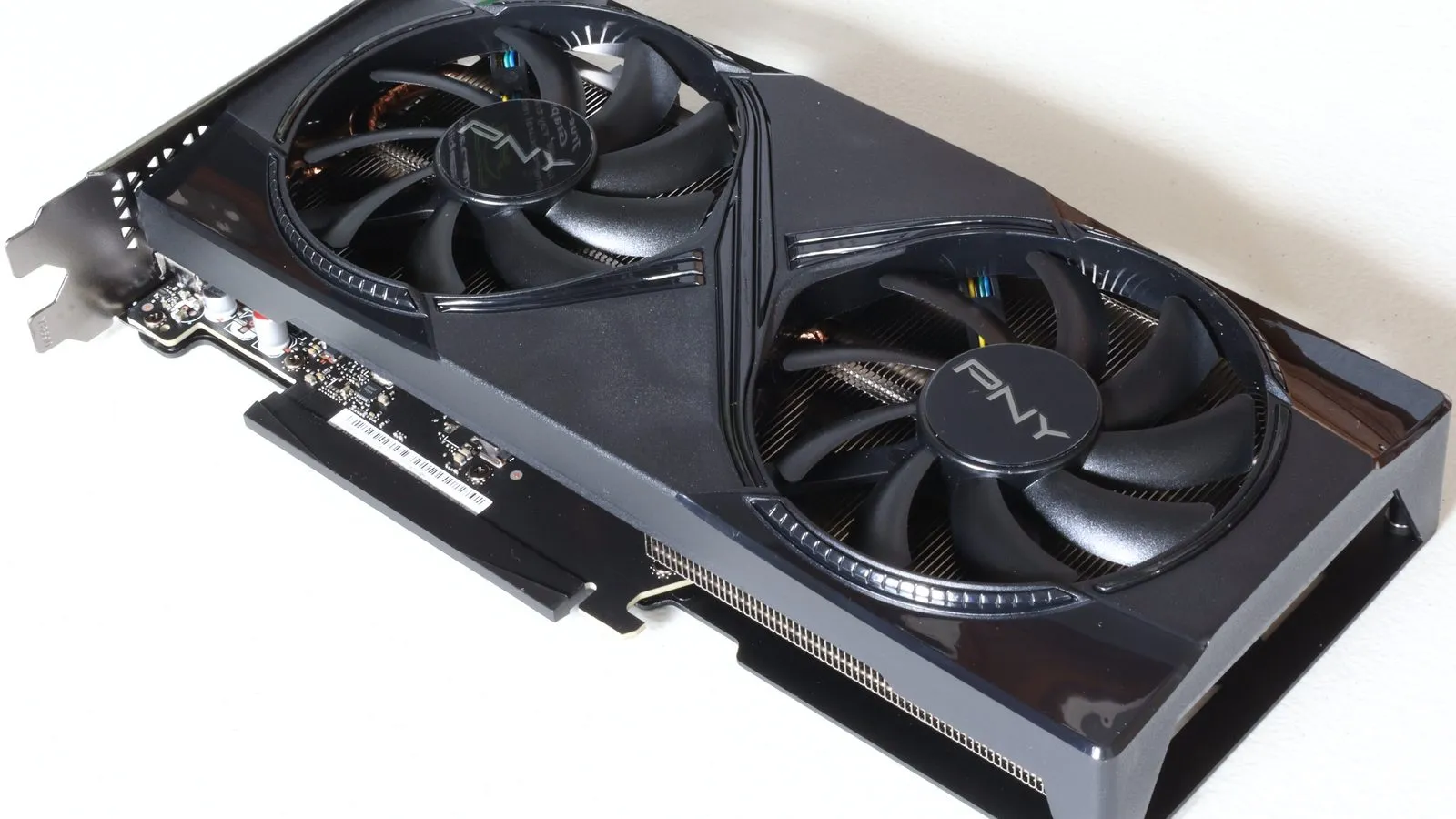
The catch is hardware: small models (3-8 billion parameters) run fine on an ordinary machine, but results closer to cloud-hosted models need a GPU with 16 GB of VRAM or more, like the one in the photo. And in May 2026 researchers at Cyera found a flaw in Ollama nicknamed "Bleeding Llama" (CVE-2026-7482, CVSS score 9.1) that exposed process memory on more than 300,000 servers reachable from the internet without authentication: fixed from version 0.17.1 onward, it is still a reminder never to expose Ollama's API online without an authenticated proxy.
Get up and running with Kimi, GLM, MiniMax, DeepSeek, gpt-oss, Qwen, Gemma and other models.
RAGFlow is an open-source (Apache 2.0) retrieval-augmented generation engine: it indexes contracts, invoices, slide decks and scanned PDFs, understands them even as tables or complex layouts, and answers questions by citing the exact passage the answer came from. As of 24 September 2026 it has more than 91,000 stars on GitHub.
It is the use case MSPs hear most from clients: "I want to search our documents like Google, but have it actually answer questions." RAGFlow does this on-premises, so contracts and client data stay on your own servers, and the citations cut the risk of the AI making an answer up.
It installs with Docker in a few minutes: git clone https://github.com/infiniflow/ragflow.git && cd ragflow/docker && docker compose -f docker-compose.yml up -d
It is not lightweight: you need at least 16 GB of RAM, 50 GB of disk and an up-to-date Docker, and the pre-built images only target x86 (not Apple Silicon Macs or a Raspberry Pi). Hand it to someone who actually knows Docker and Elasticsearch: this is not an install-and-forget product.
RAGFlow is a leading open-source Retrieval-Augmented Generation (RAG) engine that fuses cutting-edge RAG with Agent capabilities to create a superior context layer for LLMs
n8n is a visual automation platform with more than 400 integrations that now ships native AI agents: connect a trigger (a new email, a new order), a model of your choice — OpenAI, Anthropic or a local model via Ollama — and an action, by dragging blocks. As of 24 September 2026 it has more than 205,000 stars on GitHub, the highest of the three repositories in this piece.
For an MSP it is the tool for building client automations in hours, not weeks: automatic ticket triage, an agent that drafts a quote from CRM data, a notification when an overdue invoice still hasn't been paid.
Try it with a single container: docker run -it --rm --name n8n -p 5678:5678 -v n8n_data:/home/node/.n8n docker.n8n.io/n8nio/n8n
Two things worth knowing before reselling it to a client. First, the licence is not standard open source but a "Sustainable Use License": use and modify it for your own business, but do not resell it as a service competing with n8n Cloud without an enterprise licence — worth knowing if an MSP is considering hosting it for several clients. Second, in January 2026 a critical flaw (CVE-2026-21858, CVSS score 10) found by Cyera was disclosed, already fixed from version 1.121.0 onward; according to Shadowserver, weeks later tens of thousands of unpatched instances were still exposed. Always update: it is not optional.
Fair-code workflow automation platform with native AI capabilities. Combine visual building with custom code, self-host or cloud, 400+ integrations.
If you are an Italian IT manager or MSP, these three repositories cover the three ways a small company actually starts using AI: running it in-house to avoid token bills and keep data in, pointing it at your own documents instead of a spreadsheet, and having it automate a process a person currently does by hand. None of the three needs an enterprise budget: they need someone who can install them, keep them patched and know where the data ends up. Altovar helps companies integrate AI and run local or sovereign deployments; to work out which of these tools fits your setup, the Altovar AI services page is a reasonable place to start.
Sources: Ollama GitHub repository, RAGFlow GitHub repository, n8n GitHub repository (stars, licence and last-push date checked via the GitHub API on 24 September 2026); The Hacker News on Ollama's CVE-2026-7482 flaw; Cybersecurity Dive on n8n's CVE-2026-21858 flaw.
Get up and running with Kimi, GLM, MiniMax, DeepSeek, gpt-oss, Qwen, Gemma and other models.