01
NecessaryAlways on
Required for the site to work (login, preferences, security). Always on.
On September 22, 2026, Anthropic and OpenAI launched new models 90 minutes apart, cutting prices in half. What's confirmed, what's rumour online, and why you should test it yourself.
On September 22, 2026, two of the world's most-watched AI labs shipped new models just 90 minutes apart. Anthropic went first with Claude Opus 5.5; OpenAI answered with GPT-6 Sol and GPT-6 Luna. Same day, prices cut by up to half, and Hacker News's front page flooded with thousands of comments arguing over the winner. Here is what is confirmed, what is circulating online as rumour or unofficial benchmark, and why it matters even for an Italian SME or MSP.
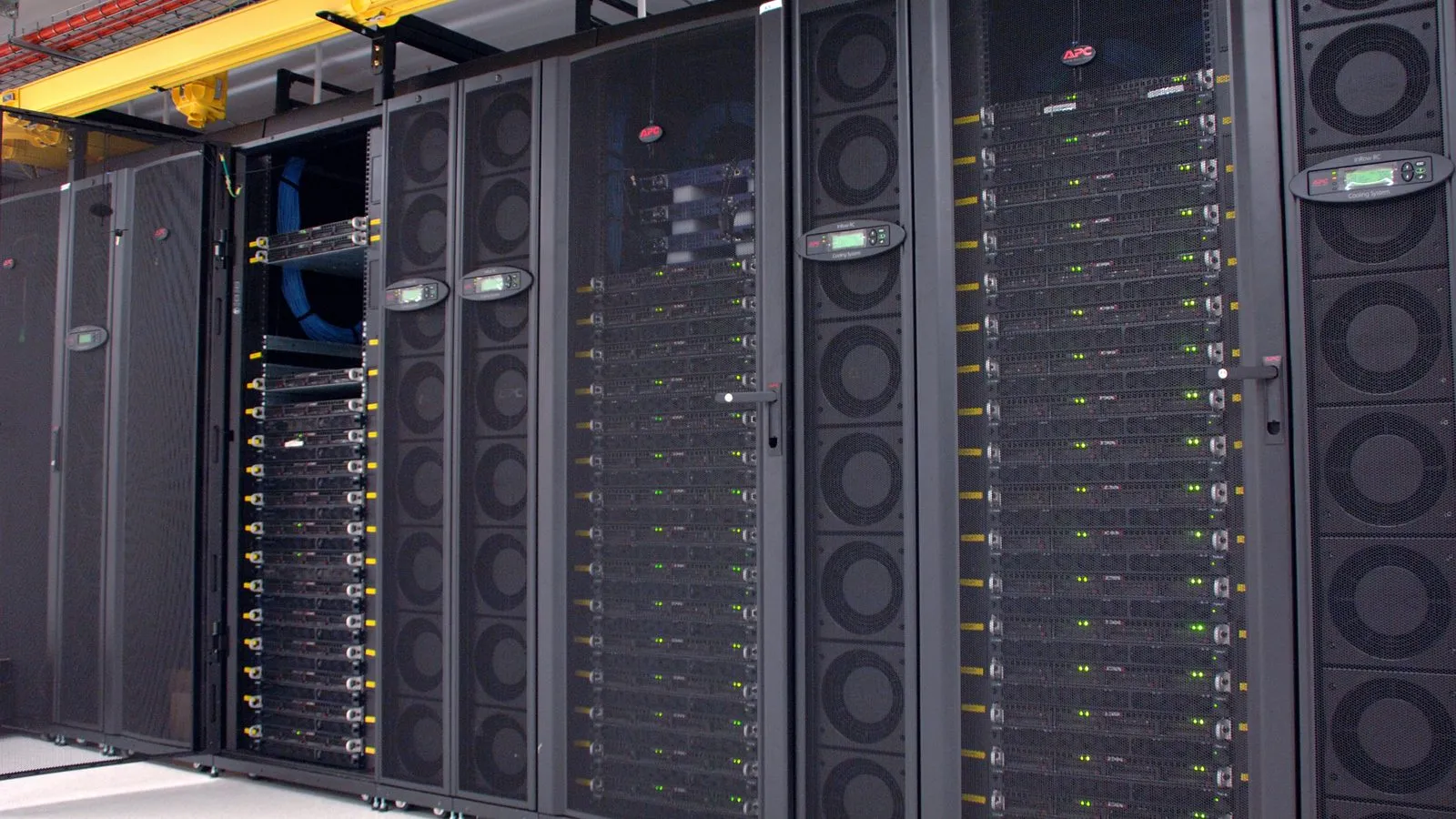
On September 22, 2026, Anthropic launched Claude Opus 5.5: 20% cheaper than Opus 5 (4 $ per million input tokens, 20 $ output), with cache reads down 60% to 0.20 $ per million tokens and output running 30% faster. The context window stays at 1 million tokens, and the model is live on Anthropic's API, Amazon Bedrock, Google Cloud and Microsoft Foundry, plus the Pro, Max, Team and Enterprise plans. Anthropic calls it its first release since Dario Amodei's essay "We Must Pace the Frontier" (a call to slow frontier AI development so safety work can catch up), published on September 12, 2026, and says the model was tested by outside evaluators including METR.
About 90 minutes later, OpenAI unveiled GPT-6 Sol and GPT-6 Luna, two cheaper siblings to flagship GPT-6 Astra (released September 3, 2026). Sol, built for coding and agents, costs 2 $/10 $ per million tokens — half GPT-5.6 Sol's promotional price; Luna, for high-volume work like summarising, drops to 0.10 $/0.50 $. Both carry a 1.05-million-token context window and are already live in ChatGPT, Codex, the API and GitHub Copilot.
On the independent Artificial Analysis Intelligence Index, Opus 5.5 at max effort scores 58 — the highest score the index has ever recorded — 5 points above GPT-6 Astra and Claude Fable 5.1, both stuck at 53. On Hacker News, the Opus 5.5 thread passed 1,700 points and over 1,100 comments, while the GPT-6 Sol and Luna thread racked up nearly as many — for one afternoon, the two launches simply took over the entire front page.
The official benchmarks are not the whole story. Developer Paweł Huryn runs Bug Hunt Bench, an independent, unofficial test that plants 105 real bugs across two production codebases and lets models work blind in their own CLI. Per its September 23-24 update, GPT-6 Astra leads with 45 of 105 bugs fixed, ahead of GPT-5.6 Sol (43.5), Claude Fable 5.1 (43) and Claude Opus 5.5 (41.7); a showcase thread on r/codex, built on that same chart, claims GPT-6 Sol marks a sharp quality drop from GPT-5.6 Sol — a reading still being argued over by people trying to reproduce it, not an official finding.
On the GPT-6 Sol and Luna Hacker News thread, user gizmodo59 points out that Luna's predecessor was already the most-used model on OpenRouter and wonders aloud how OpenAI can sustain such thin margins; user sieve reports that for their own coding workflows, open-weight models like DeepSeek V4.1 Flash and Xiaomi's MiMo-V2.6 still come out cheaper in practice thanks to better caching — personal accounts, not verified numbers. Independent blog paddo.dev ran Opus 5.5 and GPT-6 Sol on four coding tasks with hidden test suites and found both models' code passed every time; the only real difference was cost, since on the larger tasks Opus wrote about 36,000 output tokens against Sol's 11,000.
For an Italian SME or MSP, the point isn't picking a side: in a single afternoon, per-token prices roughly halved across two of the three most-used labs, and that hits immediately if you bill clients for AI-based services or run high-volume support and ticketing automation. None of this week's four models — Opus 5.5, GPT-6 Astra, Sol or Luna — is open-weight: they all run in the cloud only, so "where does my data go" boils down to "which region and which cloud" among AWS, Google Cloud and Azure, not real local control.
If data sovereignty is a hard requirement — and it often is for regulated businesses — the alternative that even Hacker News commenters point to is an open-weight model (DeepSeek, MiMo, Kimi) hosted on your own infrastructure, trading a few benchmark points for control. Either way, the rule that emerges from the independent benchmarks above still holds: bring 2-3 of your own real cases — a contract, a support ticket, a piece of code — and test them yourself, because the gap between these models is smaller and messier than the announcements suggest. Altovar helps companies navigate these model shifts and evaluate AI integrations, including local or sovereign deployments when data can't leave the company.
Sources: Anthropic, Claude Opus 5.5 announcement; OpenAI, GPT-6 Sol and Luna announcement; TechCrunch; Hacker News, Claude Opus 5.5 thread; Hacker News, GPT-6 Sol and Luna thread; Artificial Analysis; Bug Hunt Bench by Paweł Huryn; Paweł Huryn's X post; The Hacker News, on the safety tests.