01
Necessary Always on
Required for the site to work (login, preferences, security). Always on.
A US appeals court upholds, 2-1, the exclusion of Claude from work for the American military. What was decided, what is still open and what changes for Claude users in Europe.
A US federal appeals court has confirmed that the Pentagon can treat Anthropic, the company behind Claude, as a supply chain risk. The story passed 400 points and 700 comments on Hacker News, because it touches a question that matters to anyone buying AI: who decides how a model is used, the vendor or the customer?
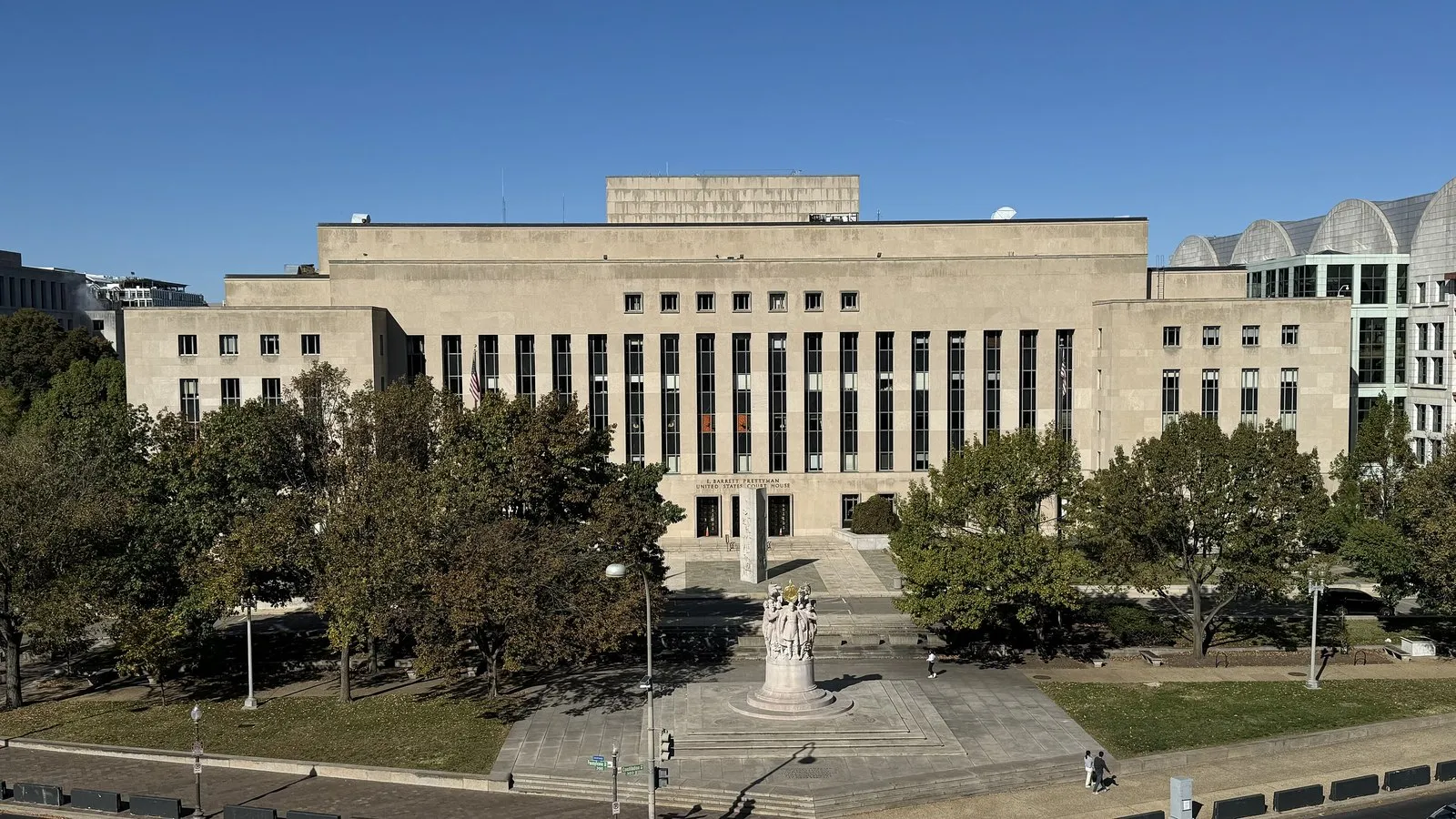
On 25 September 2026 the US Court of Appeals for the District of Columbia Circuit rejected, by two votes to one, Anthropic's petitions against the designation. Judge Gregory Katsas wrote the majority opinion, joined by Judge Neomi Rao. According to Katsas, the Department had "ample support" for concluding that the continued integration of Claude into its information systems, by the Department or its contractors, presented a statutorily covered national-security risk.
Judge Karen LeCraft Henderson dissented: in her view the law does not treat "a contractor's honest and upfront enforcement of restrictions" as the kind of risk that allows the government to exclude it. The dispute started with Anthropic's refusal to relax contract terms that bar the use of Claude for lethal autonomous warfare and domestic surveillance. In March the Pentagon responded under a 2018 supply chain security law: the designation keeps the armed forces and their contractors from using Anthropic's models in defense work.
There are actually two designations, challenged in two different courts. In August, District Judge Rita Lin in San Francisco ruled against the government on the other one, and that decision remains in effect. An Anthropic spokesperson said the company remains confident and is "considering all options, including further review": it can ask the appeals court for a rehearing, including by the full court (en banc), or petition the Supreme Court.
On Hacker News, readings are split. Some call it a "textbook" designation: if a vendor puts conditions on military use, the military would rather keep it out of its supply chain, as it would with any product that comes with strings attached. Others see political retaliation and bet the ruling will be reversed en banc.
One argument keeps coming back: a company cannot be a national-security risk and, at the same time, a supplier that is being pressed to change its rules so it can be used without limits. Other users point out that staying out of military contracts is consistent with the principles Anthropic claims. These are user opinions, not legal analysis: for now the only certainty is that the case is not over.
If you are a European SME or MSP using Claude, this ruling changes nothing in your contract: the designation concerns the US Department of Defense and those who work for it. If you supply software or services to customers in the US defense supply chain, though, it is worth asking whether they use Claude on those projects.
The broader lesson applies to everyone:
If you want an AI strategy that does not hinge on a single vendor, you can find our approach on the artificial intelligence services page.
Sources: CNBC, ABC News, The Next Web, Hacker News discussion.