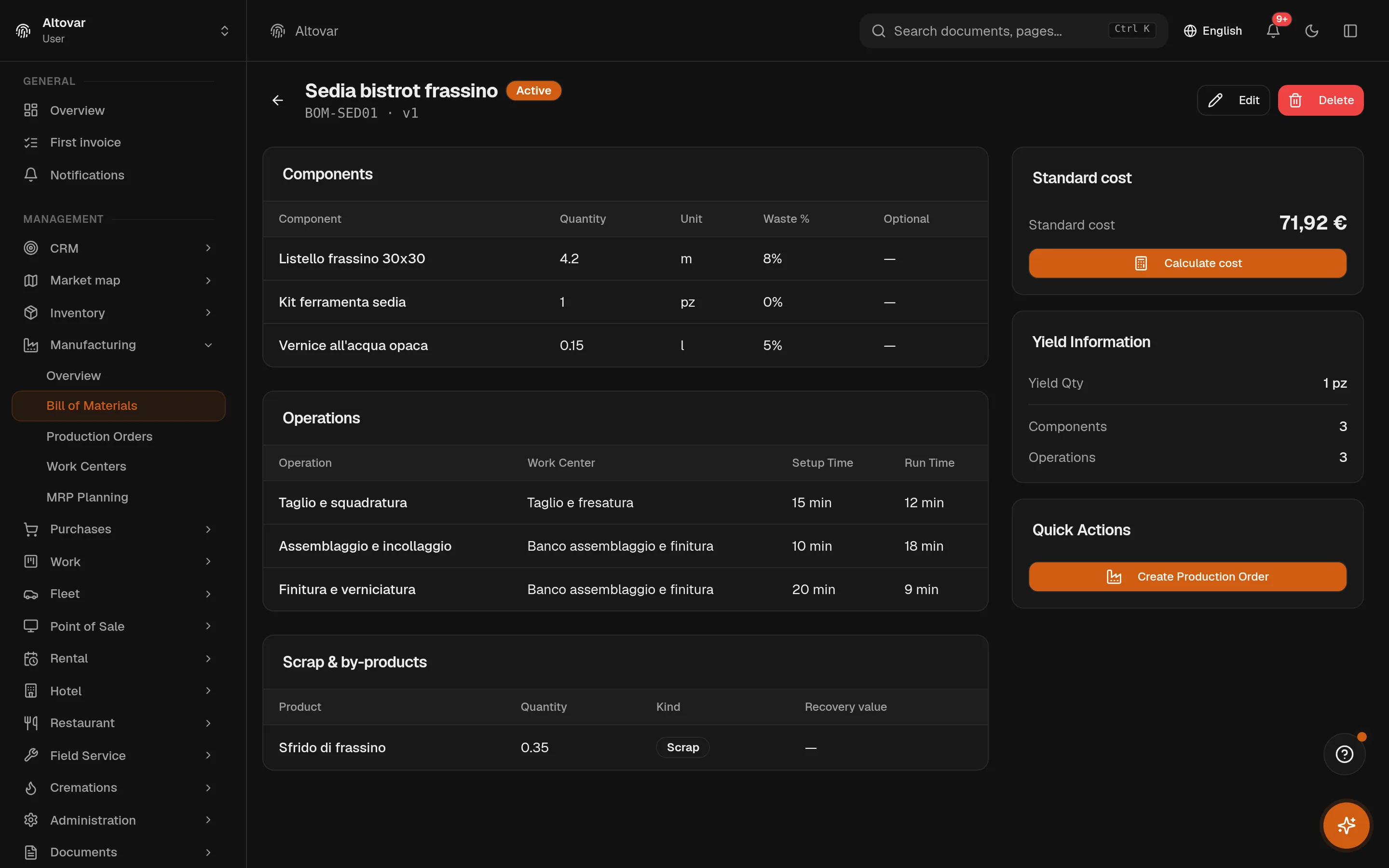
- Waste
- Per line each component line carries its own waste percentage, applied to the requirements when the order is created: 24 demo chairs ask for 108.86 m of ash strip, not 100.80.
- Operations
- Setup + run × quantity on work centers with a cost per hour; the operation cost is the minutes divided by sixty, times the rate — and it rolls up into the standard cost of the product.
- Order states
- 5 planned, confirmed, in progress, completed, cancelled — transitions enforced by the server, so a completed order was necessarily started.
- Completion
- Real stock movements components consumed, finished goods received at their rolled-up cost, scrap written off and by-products credited at their recovery value.
Workshops, joineries, small factories
What it costs to make, before you make it.
A bill of materials in Equinox is not a list: every line carries its waste, every operation its minutes on a priced work center. When the order is created the requirements already include the scrap; when it is completed the components leave the warehouse and the finished pieces enter it at their real cost. The purchase orders that fed it and the hours that made it sit in the same database.
Twenty-four chairs, five moments, one cost.
Scroll through a demo order. Move the quantity: requirements and cost recompute the way the product does — waste per line, setup once and run per piece on each work center.
-
The bill of materials, with its waste
The demo chair: ash strip by the metre with 8% waste, a hardware kit, varnish by the litre with 5%. Three operations — cutting, assembly, finishing — each on a work center with setup and run minutes and a cost per hour.
Manufacturing -
Requirements that include the scrap
A production order for twenty-four pieces multiplies every line by the quantity and by one plus the waste. The warehouse shows what is short; the purchasing module turns it into supplier orders.
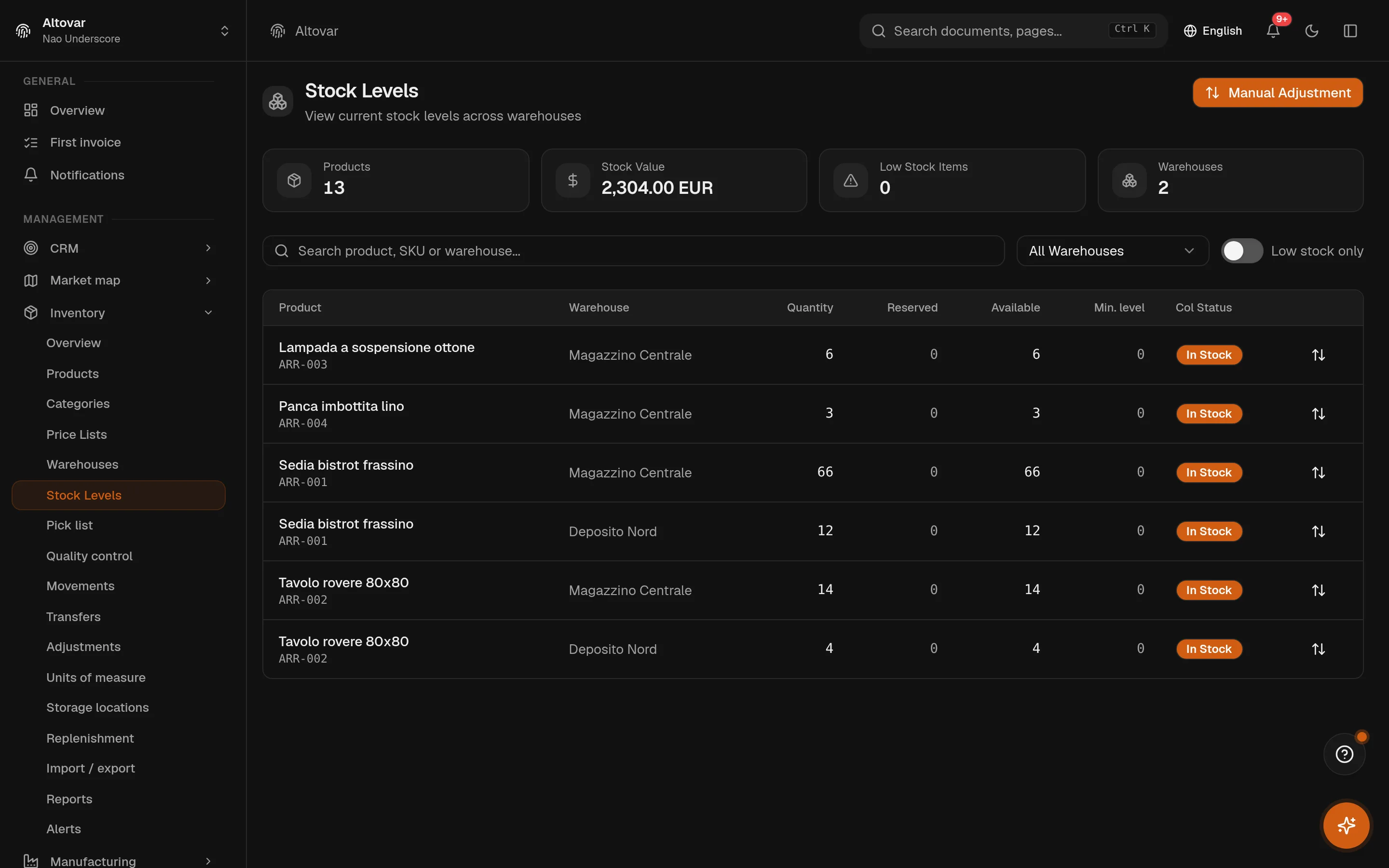
Warehouse -
Operations on priced work centers
Cutting is set up once and runs six minutes a piece; assembly eighteen. Each operation costs its minutes at the center’s hourly rate, and the sum is the labour part of the standard cost.
Manufacturing -
Time logs against the plan
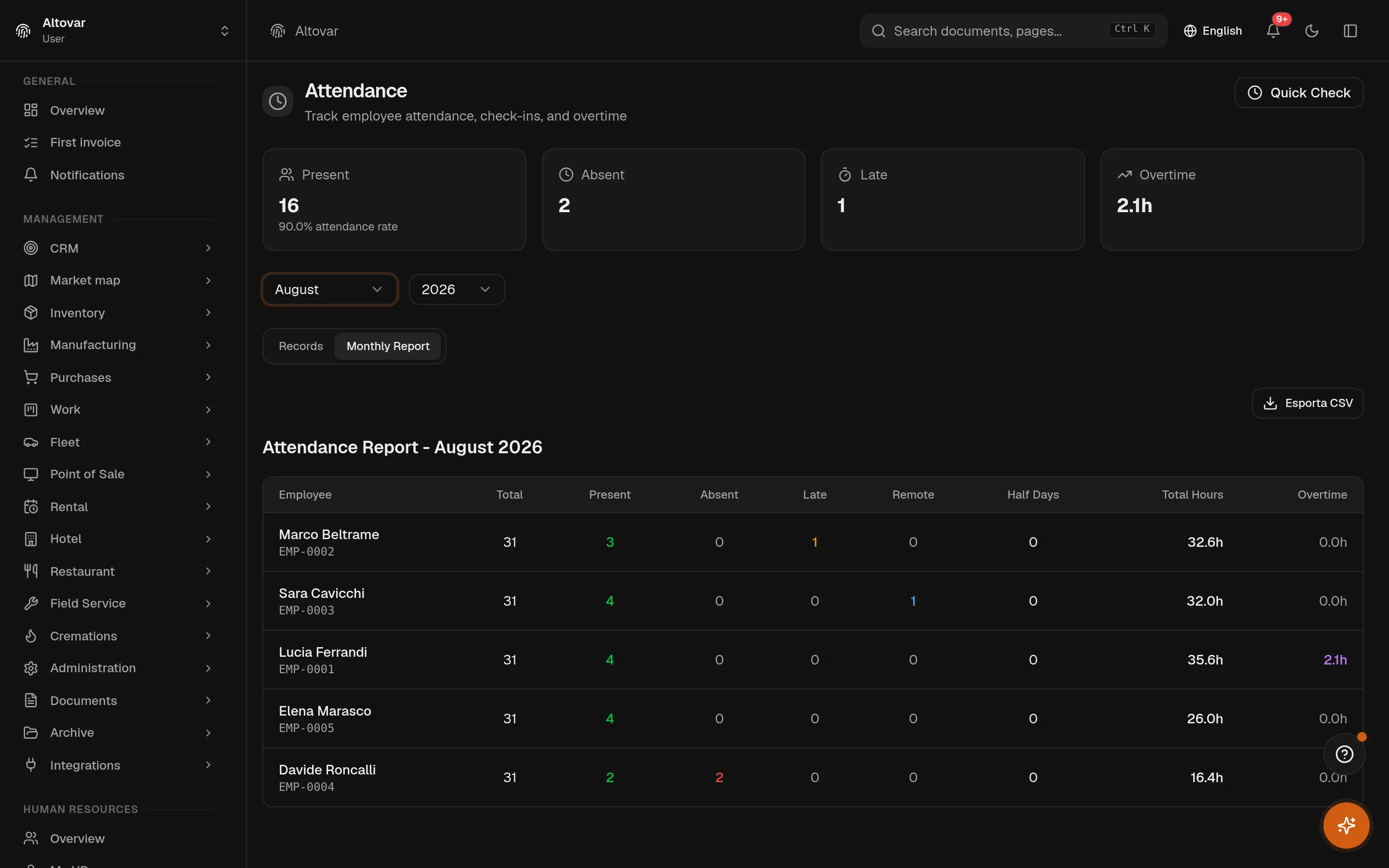
The order moves to in progress; operations are advanced and time is logged against them. Attendance of the people on the floor lives in the same system, overtime computed at clock-out.
People -
Completion writes the warehouse
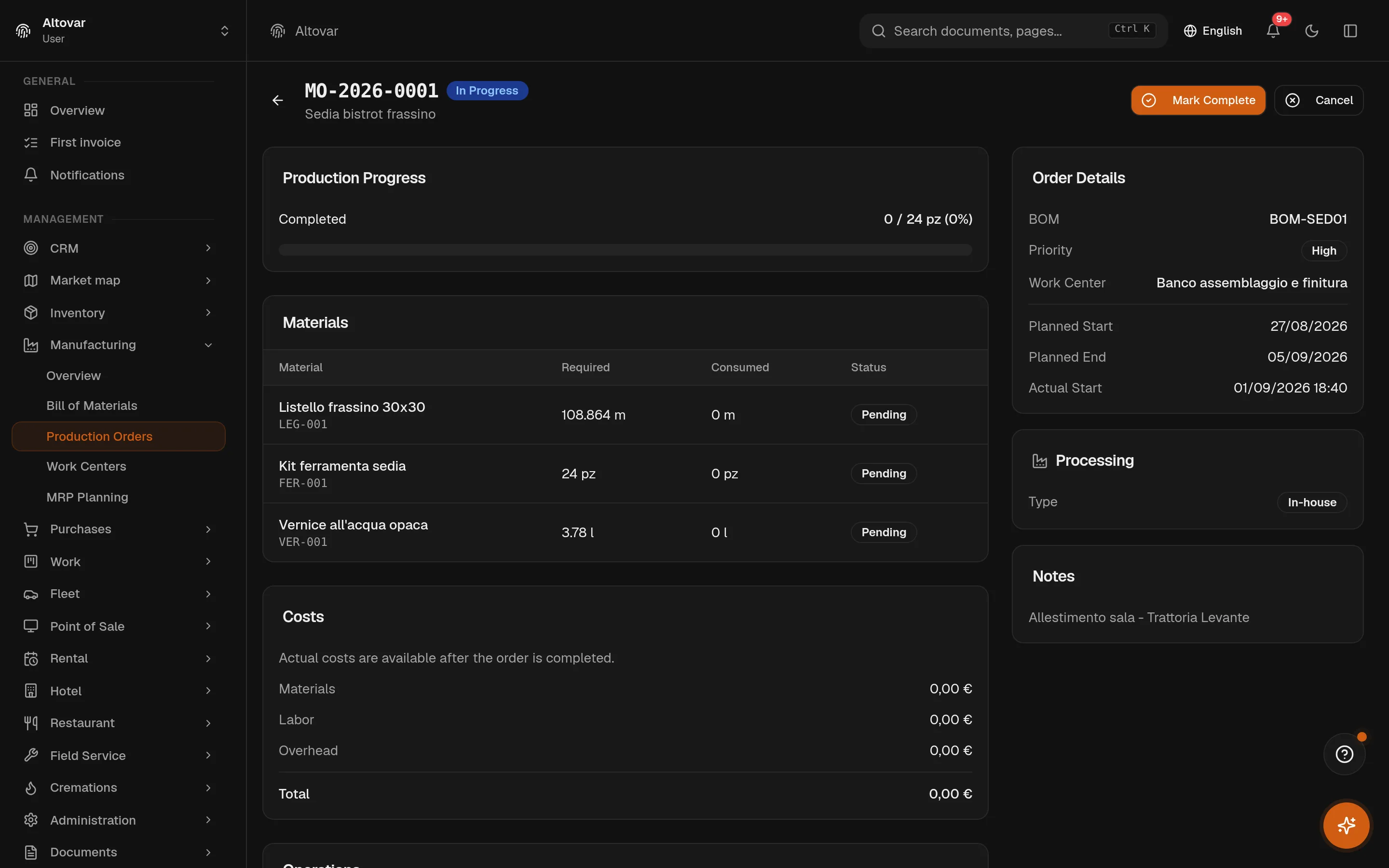
Components are consumed and the finished chairs received as real stock movements at the rolled-up cost; scrap is written off, by-products credited at their recovery value. The delivery and the installation at the customer’s are a work order for the team on the road.
Projects & field
- LEG-001Ash strip 30×304,2 m+8% waste
- FER-001Hardware kit1,0 kit—
- VER-001Water-based varnish0,15 l+5% waste
Every line carries its own waste; the operations sit on work centers with a cost per hour.
- LEG-001Ash strip 30×30108,86 mincl. waste 8%
- FER-001Hardware kit24,00 kit
- VER-001Water-based varnish3,78 lincl. waste 5%
Requirements = quantity × (1 + waste). What the warehouse lacks becomes a supplier order.
- TAGLCutting20′ + 6′/pc103,87 €
- ASSEAssembly10′ + 18′/pc235,73 €
- FINIFinishing15′ + 9′/pc115,50 €
Operation cost = (setup + run × quantity) / 60 × rate. Demo rates: 38, 32 and 30 € per hour.
Operations are advanced and timed against the plan; states are enforced by the server.
Completion writes real stock movements at cost; scrap written off, by-products credited.
Five modules, one shop floor.
Production starts with what is in stock and what needs ordering, and ends with pieces on a van. These are the modules a workshop uses in Equinox; each has its own page.
-
Manufacturing
Bills of materials with waste, operations and scrap; production orders with enforced states; standard cost rollup.
-
Warehouse
Stock of components and finished goods across warehouses and bins, lots, reorder thresholds by urgency.
-
Purchasing
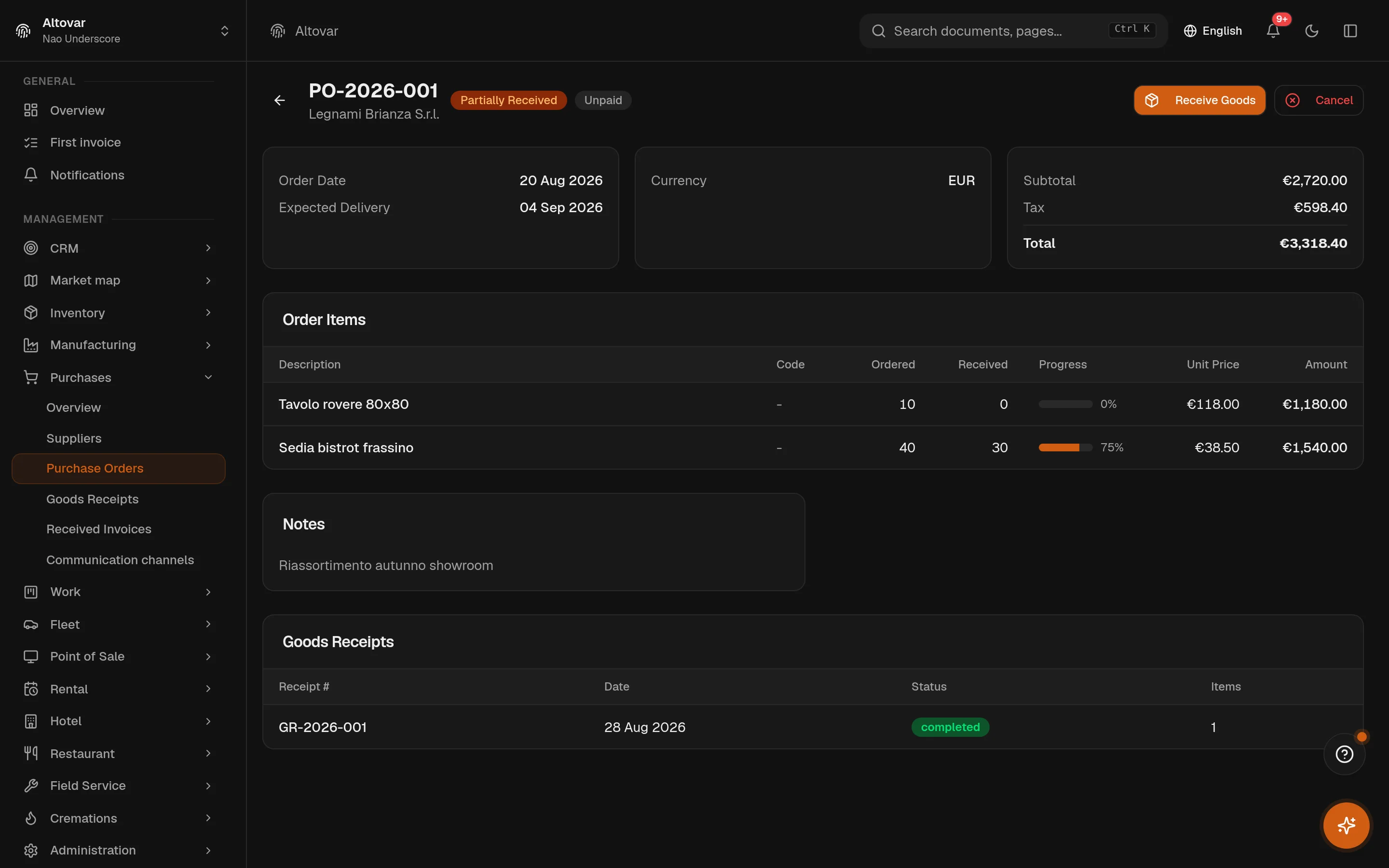
Supplier orders for what is short, partial goods receipts checked against the order, supplier invoices.
-
People
Attendance with overtime beyond eight hours, leave balances, contracts — the people on the floor.
-
Projects & field
Work orders for delivery and installation at the customer’s, with checklist, parts, photos and signature.
What the workshop actually looks at.
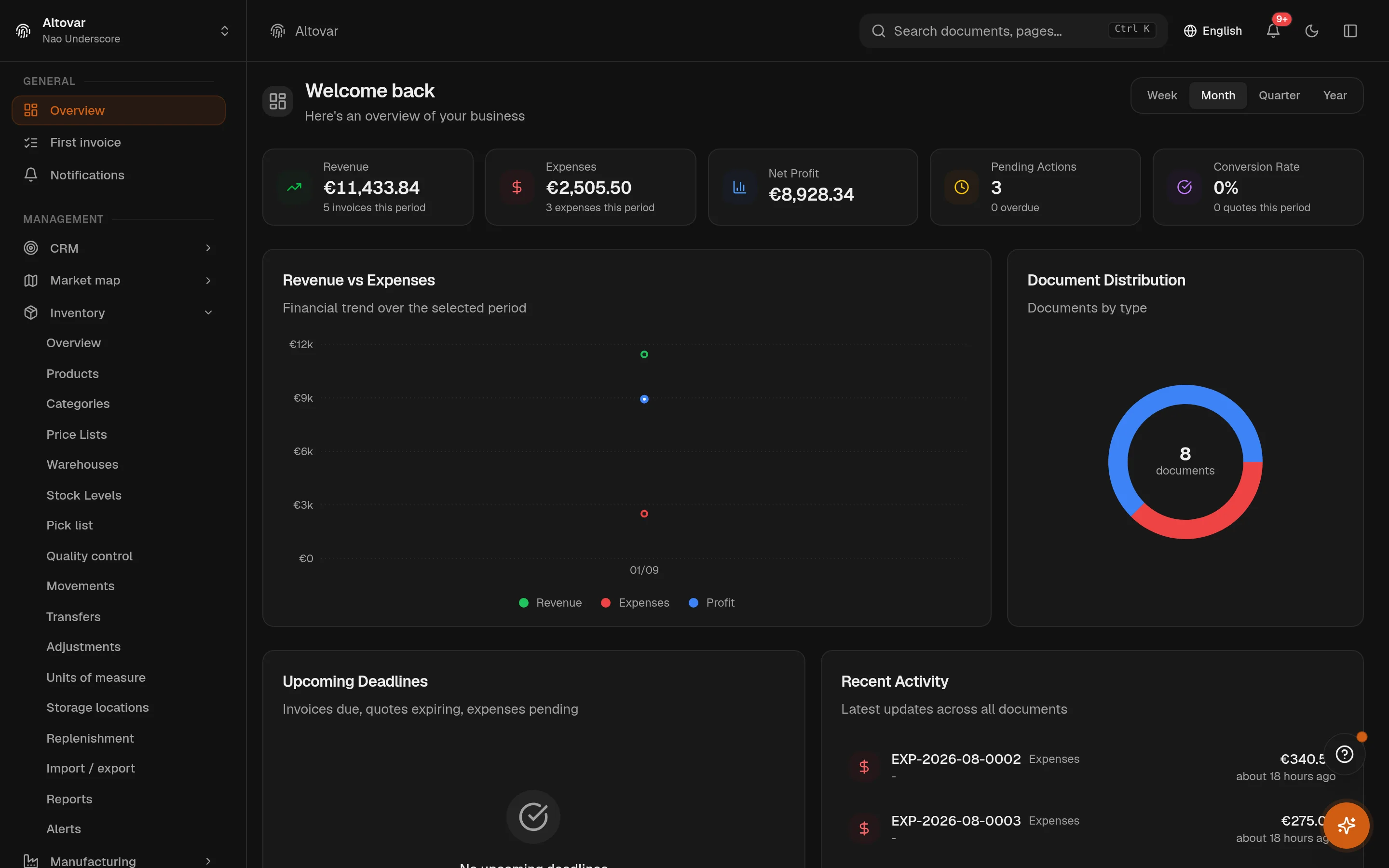
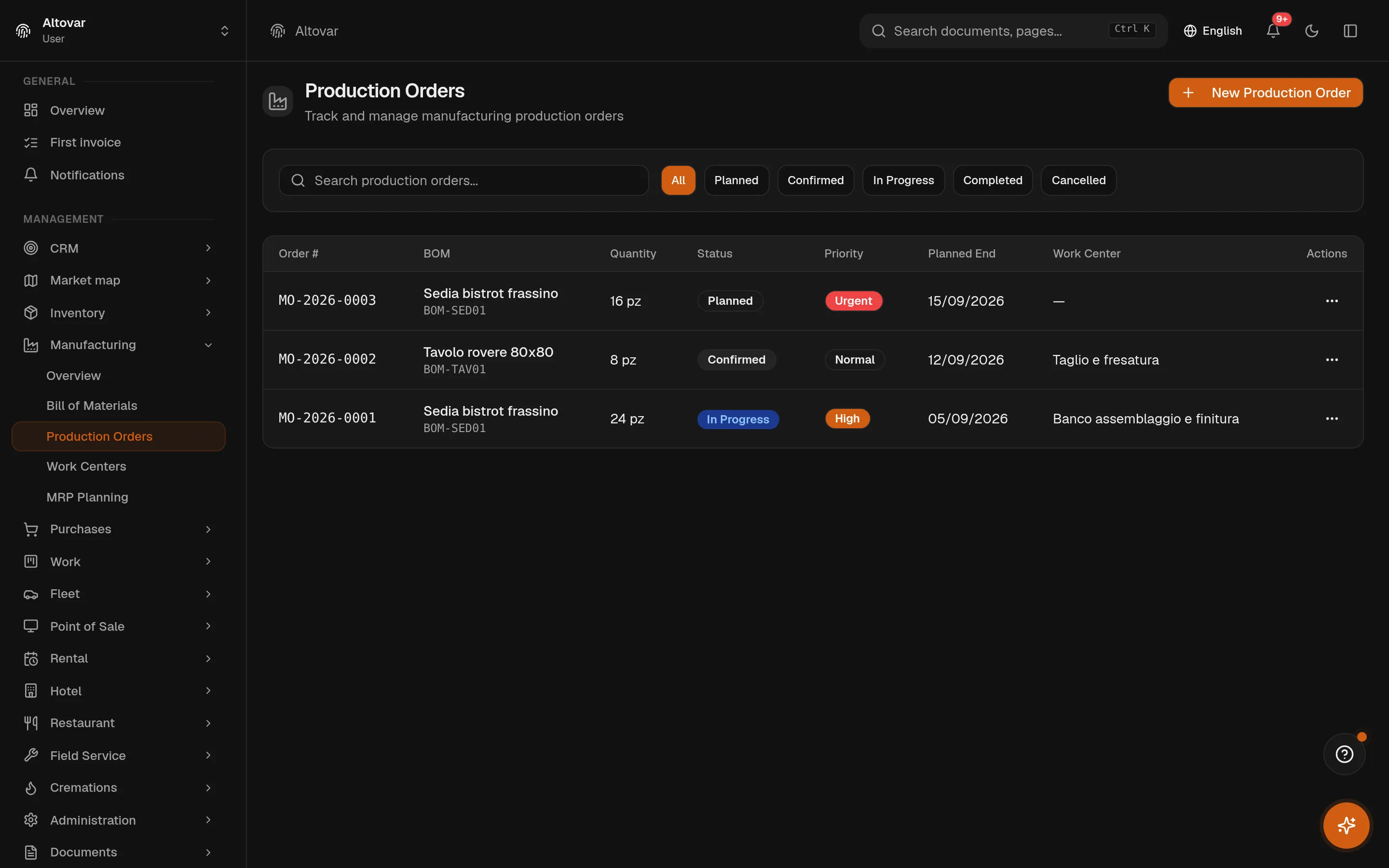
Real captures of the application on a demo workshop. The production orders, one order in detail, stock across warehouses, a supplier order being received, the reorder list and attendance.
What is not here, on purpose: the MRP planning page is not shown because it is broken in the current build; there is no capacity scheduling or gantt on work centers, no automatic purchase orders from the plan, and the order, the receipt and the supplier invoice are linked by reference and compared by a person, not matched three ways automatically.
Bring a bill of materials.
Your product, your components, your operations. We will load it into Equinox in front of you and show what the cost looks like — and be straight about what the module does not do.